


I write The Colour Bar every week, except when major planetary incidents interfere- examples include “urgent pitches”, meetings with influenza, and ‘summer’.
You could subscribe here Substack, or get every dispatch on Linkedin too, if that’s your thing. And it would mean a lot to share what you like, like what you share.
Don’t be a lurker.
Thanks,
Shakey
Sacred cows: Australian sport, cricket, and crossroads.
The Horror: May movie musings.
Eat Your Words: A take on the AI’s messaging issues
Fake It, Don’t Break It: Virtual assistants shaping Linkedin
➕ · Wicked wickets · Spotify’s AI tool · Top50 Asian brands ·

1. Sacred cows, mate.
“For the first time in its modern history, Australian sport is fully exposed to outside forces it doesn’t control.”
I have always viewed Australian sport from afar and yet, felt it oddly familiar. The primary reason for this is predictable- cricket. It has fostered a faux-understanding and connect with Aussie sporting culture that is further boosted by the Australian Open, the presence of Aussie athletes in most sports, their outsized success, and their widely accepted image amongst many non-Aussies (especially Asians?) as a nation that “just has sports in their blood.”
As a cricket tragic, I also share the uncomfortable space of having plenty of cricket at my fingertips, yet not enough of the kind I enjoy the most. (Nation vs Nation Test matches, if you must know). It is easy to find many who both like the T20 format yet adore the Test format more, we lament the very apparent threats to the oldest shape of the game, while enjoying the buzz of the newest. Individual fans might find some personal stability in grappling with these two, but the sport itself is far from finding such balance. In fact, it has been viewing the impending inevitability of a reckoning with some trepidation, and a generous dose of plain. Even naive hope.
So, I read this piece in SVG by Callum McCarthy with some interest. He makes the case that cricket in Australia- not uniquely- faces a bit of a reckoning. For a great sport that enjoys a passionate following yet has lost money every season since 2018-19, (A$11m in 2024-25 despite revenue growth), difficult decisions knock on the door, harder by the week. More specifically, the recent vote to not privatise the BBL teams (to most likely Indian investors), does not seem like one that can stand for very long.
These kinds of existential threats are entirely new to an Australian ecosystem that has never had to worry about the outside world. Domestic TV and sponsorship revenues have been growing consistently ever since the 1970s and its sports media has always been Aussie-owned in one way or another.

2. Oh, the Horror!
You might not know about the two biggest movies in the US in the last couple of weeks… or you more likely absolutely have heard about Obsession and Backrooms. Both come from the generally reliable cheap-horror format, but that’s not the story here. Both also come from young directors who have made their name and learnt their craft as Youtubers. I mean, Kyle Parsons who helmed Backrooms is 19, the youngest director ever to top the box office. When the producers first spoke to him on a Zoom call a couple of years ago, they had to go through his parents- he was just 16 then.
While creators have built businesses and followings online on their own, that doesn’t mean they don’t need any help. If you want to make a hit movie or release a No. 1 record, it helps to get support from people who’ve done it before.
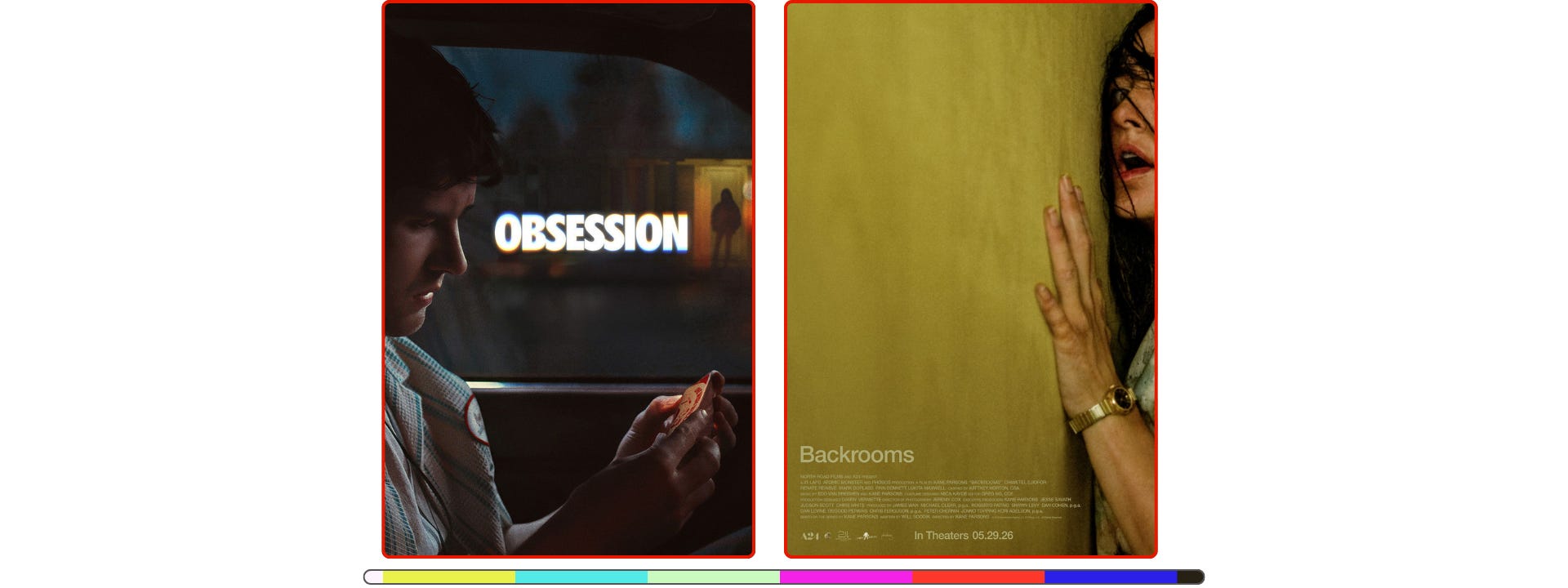
The two themes most popular for commenters are predictable- ‘cinema is not dead’, and ‘Youtube eats Hollywood’. Both have truths and both can be overblown. The promising aspect definitely is that this is the best May for the industry since 2019, and spread across more titles than one Marvel blockbuster.
The other interesting aspect in my mind is how the success of such ‘Youtubers’ comes when there is proper collaboration with movie people who have done it before. Success is, after all, more than only creative vision or knowing your Youtube audience. Backroom was produced by Atomic Monster, the production company from James Wan, the creator of The Conjuring franchise, and co-creator of Saw and Insidious franchises. A legitimate horror maven. Financing came from the likes of Peter Chernin- no Youtube kid. Obsession saw producer Jason Blum and Blumhouse (horror masters) enter the story late in the game to help market and land the film.
So while for much of the last decade or more, establishment Hollywood and Youtube creators have struggled to figure out what to do with each other, the successes will come with the other, not despite.

3. Eat your words
Say what the thing does. Describe what it changes. Let people draw their own conclusions about the stakes. Sadly, that is too normal a stance, too practical.
I don’t analyse the markets, and this is not a business newsletter by a long stretch. But I have views. They could probably be encapsulated in something along the lines of, ‘Why (and how) is everything purely fuelled by shareholder value that need not translate to any greater impact, nor be concerned with externalities?’ Probably no place is this more apparent to me than in AI, where the hype cycle that we thought we had gotten used to from SIlicon Valley, has outdone itself.
I read Om Malik after a long time, actually. In ‘Eat Your Words’, he speaks of ”AI’s self-inflicted messaging crisis”. That opening quote above seems all too common sense, and all too unlikely to ever be the way things actually move.
Oh also- George from Seinfeld makes the most unexpected and amusing appearance.
Normal does not get funded. Measured does not get an $850 billion valuation. Sober does not land on the cover of every magazine in the world simultaneously.
The whole industry is caught in this loop now. You need the fear to justify the funding. You need the funding to build the thing. The thing then justifies more fear. Try telling the story in plain, simple language. $850 billion is going to shrink faster than George Costanza’s prospects when coming out of an icy cold pool.
4. Fake it, don’t break it
“It’s all AI comments by fake people answered with fake replies by other fake people.”
For all of us who feel like some of the posts and interaction on Linkedin seems hollow, have a read on Rest of World about the “self-sustaining industry of humans and bots generating an illusion of engagement.”
You know it, or you should. There are some ‘leadership lessons’ or ‘life experience’ posts that you just know are engagement first, personal meaning second. If you get that sinking feeling that the person you follow didn’t write that, its pretty possible they actually didn’t. Because “for $7 an hour, virtual assistants use AI tools to write LinkedIn posts and comments on behalf of Western executives.”
Sure, the piece by Michael Beltran suggests both the platform as well as the individual might be looking to move away from enabling these ‘virtual assistants’ who generate both posts and content for their thought-leadering clients. Whether that happens remains to be seen.
But even that is not likely to stop the already everyday occurrence of real people using AI-generated comments to express their ‘engaged’ selves.
It’s the deluge some of us trawl through every day.
I am not holding my breath on real thoughts dominating here.

➕Quick Hits
The ICC has (along with SKY) collaborated with Wicked for the opening of the Women’s T20 World Cup. “Wicked to wicket action”, they said.
Spotify and Universal Music Group have an agreement; Spotify will launch an AI-powered tool, for paying fans to create licensed covers and remixes. It is “grounded in consent, credit, and compensation”, a clarification it is unfortunate has to be explicitly stated in these times.
There was a Top 50 brands of Asia list, as voted by 2million customers. Shoppee topped it, but ‘digital’ brands like IG and Spotify made it on for the first time. Yay?

AI may seem to have democratised writing,
but the truth is it has industrialised mediocrity.
_Utpal Kumar, in FirstPost