


Do you like scrolling through videos every once in a while? A break, a moment or ten, a rabbit hole? Unless you are deeply committed to constantly curating your feed and very intentional about the videos you watch (bless you if you are!), you are likely to be subservient to some little or big algorithm. And you have surely seen clips from shows, movies, podcasts that enrich, enliven, entangle our scrolling sessions.
Welcome to another collision of creativity, brands and tech. Today I look (again) at clipping, the practice of extracting clips from shows and podcasts to build momentum around them. It has become more and more a sophisticated tool to market and engineer ‘virality’. It has led some to wonder if the clips themselves are the point of it all, and their impact is increasingly also conflated with all shorts in general.
Besides clipping, this week’s scroll sees graphic novel-esque journalism, football nobodies & legends, Tiktok branding and stormy boyhoods.
I write The Colour Bar every week and you can get it over on Linkedin or subscribe on Substack, whichevr is your thing. And it would mean a lot to share what you like, please!
Thanks,
Shakey
Clipping: The things that promote the thing are now the thing?
trAPPed: web comic x journalism
Curated/Cuts: Backyard Legends & Tiktok branding
➕ · Warner Music wants movies · IG wants originality · AI wants music ·
☝🏽 Busy? Lazy? Multitasky? Click play above and let me read this to you.

1. Clipping: new vistas or sunsets?
‘Clipping’ has received plenty of attention in recent months. I wrote about it last year when the clipping farms agencies were starting to get some attention. The term is generally used these days to refer to the posting of video clips from premium shows, comedies, stand-ups and podcasts. They appear seemingly organically, but are increasingly part of a deliberate approach at flooding social feeds with the show’s content. Much of what we see and engage with in our feeds is a byproduct, actually ‘from somewhere else’. Clipping is pretty much its own ecosystem, though impact on actual listenership and audience growth is questionable, and remains debated.
My questions around the approach remain centred around short term numbers versus meaningful consumption of the ‘actual’ content. They definitely can create buzz or virality, and the value of this is not to be discounted. Yet, how much do they drive long form listening or viewing, i.e of the actual product. What do they do to build a brand/persona/IP that actually sustains itself?
Some, like podcaster Ed Elson are starting to make the case that the clips are the content. I am sceptical as to how that is sustainable, nor have I heard any rationale how that helps build an IP.
OpenAI recently (unexpectedly) acquired the podcast TBPN- many feel that the deal value came as much from their viral clips as the show itself (TBPN is a rare one that actually monetises the clips themselves). A reference point was thrown out- a set of TBPN’s ten episodes had 7K live views vs 257k clip views. I would argue that the value of views in each of those groups is really not like for like.
In “The Video Clipping Machine Behind Clavicular’s Viral Fame”, ($) Bloomberg’s Cecilia D’Anastasio looks to paint us a picture of how virality is engineered in today’s content landscape, using ‘looksmaxxing’ poster-child Clavicular’s case as a reference.
I also think much of this gets a bit murky in terminology. Clips, clipping, short clips, short videos, original short form, premium clips. And different commentators coming from different ecosystems and addressing different elements use these loosely.
On that- clips aka clipping can’t and shouldn’t be confused with original short form content. I am unsure why the two are being conflated. (“Hollywood’s clip-feed strategy is dead wrong and these short-form mobile feeds simply recycle long-form content into promotional snippets. Instead of quick clips, streamers need to explore how to tell new stories via vertical microdramas or other emerging narrative formats.” ^ via Jim Louderback).
Or say, in the light of Netflix recently announcing their own ‘Clips’, seemingly an extension of the moments feature they introduced last year. This is very much a funnel for them, not an end in itself.
Each of these short video buckets have their own purpose/place. Original shorts have always been something that creators, brands, publishers can (should, mostly) lean in to build a following around. Storytelling in the service of their IP or product or persona.
As a wise man once told me- do you want to make the thing or the thing that promotes the thing? I disagreed with that line of questioning then, but it is appropriate in this context.
The things that promote the things- i.e. clips, shorts, extracts, ads, are not the point of the endeavour. Surely? If they are, then the ambition should not be a show or podcast at all- you should just be aiming to get clip virality and whatever you make from that.
Related to all of this and wider yet, is this excellent piece from Ryan Broderick. He boldly but gently stakes the claim that “short-form video collapse is clearly just over the horizon.” Read it to trace a take from GIFs and Vine through to all our platforms now and, yes, clipping.
“There was an assumption that carried across Vine, Facebook Watch, TikTok, and Instagram Reels that the economics of scale and attention would eventually make sense. That short-form video would eventually mean something. That either creators would get the chance to “graduate” from short-form video to TV and movies or, at the very least, make something that felt more important. Instead, things have only become stupider and more wasteful, as platforms demand more video content than ever.”

2. trAPPed
A web comic meets investigative journalism?
Creative is not just in advertising, branded content or design. This week I want to share a wonderful example of how journalism and creative storytelling can come together. Bloomberg’s reporting on a digital scam in India was crafted into a graphic novel style narration, and I think it is done so well. It did not feel like a cosmetic layer of art, nor a version of a report. trAPPed felt like its own story, crafted ground up to be what it eventually was, a seamless scroll into the ordeal of a scammed single mum. And that, I think, makes the difference in how it touches the reader.
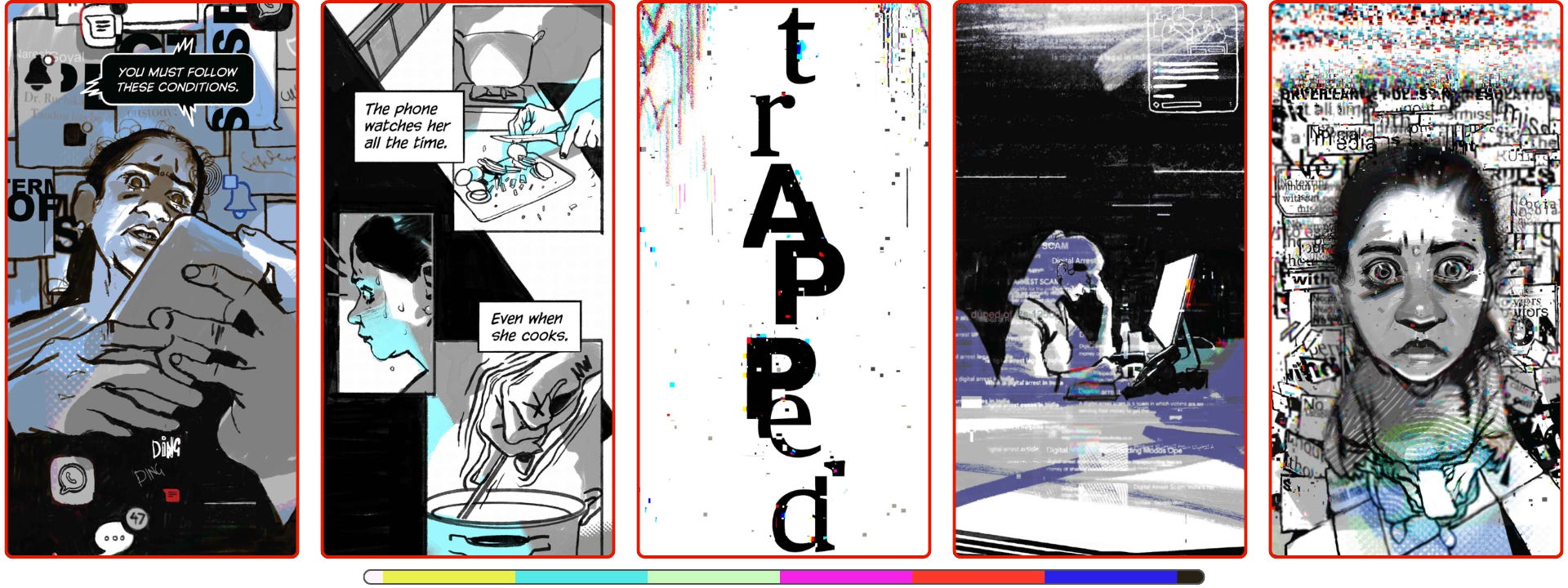
“an illustrator in Mumbai, an investigative reporter in Delhi, and an investigative reporter in Tokyo—worked together to document and illustrate the psychological ordeal of a scam victim in Lucknow, India.”
It was recently awarded the Pulitzer Prize for Illustrated Reporting and Commentary.
Art Anand RK · Reporting Suparna Sharma · Natalie Obiko Pearson ·
Lettering Aditya Bidikar · Color by Nisha Singh ·
· Producers Nadja Popovich, Amanda Cox, Ken Armstrong, Flynn McRoberts ·Jui Chakravorty ·

3. Curated/Cuts
· Backyard Legends ·
“Some of us are destined for athletic greatness, some of us are destined to cheer on athletic greatness from a respectful distance ... like yours truly”
That’s one thing Timothee Chalamet and I have in common, then!
It’s entirely possible you have not seen the Adidas football spot that smacked into our consciousness last week. Possible but not probable.
This is World Cup year, and the expectation we all have is to have plenty of entertaining, enjoyable, powerful, fun, surprising advertising. Adidas’s latest is one we will likely be seeing in plenty of year end lists and awards. I first saw the trailer and it was a great little tease. But then the real thing dropped, and smashed it out of the park. Or hit the target. Or landed in the top corner. Kindly insert football metaphor of choice.
Jude Bellingham. Lamine Yamal. Trinity Rodman. Messi. Bad Bunny (because, why not?).
And Chalamet.
[Opera misstep, bye bye. The Timothee is back. Schwep! ]
And oh yes, some other minor characters you might find familiar- David, Zinedine, Alessandro, anyone?
All in the story of trying to beat a legendary undefeated street trio.
I love the storytelling, the pace, the delight. Its the kind that can even touch non-fans. I was already asked by one, “I was captivated… but what happens next?”
We are going to see all kinds of amazing World Cup related ideas. But adidas ain’t messing about with this. Everyone else, the ball is in your court.
I mean your half.
I mean half line.
Or something.
Watch this if you haven’t. Watch it again if you have.
Go on.
PS- have had some animated conversation that the young 90s/2000s version of Zidane, Beckham et al are “AI-generated”. While AI workflows are slowly making their way, my instinct was these are not, simply, ‘genAI’ but de-aging and VFX workflows. My searching has only found it some speculation around AI being used, and described as “cutting-edge CGI and visual effects”. It was done largely by the team at Untold Studios (and their long list of credits doesn’t include any ‘AI artist’ title).
At any rate, the fact that people feel there was no Beckham or Zidane on the shoot and they are entirely AI-generated, is very telling of our times.
· adidas · Lola USA · Smuggler ·
· Director Mark Molloy · DoP: Harry Wheeler ·
VFX: Untold Studios Tomek Zietkiewicz Nicole Duncan, Ange Toner ·
Music & Sound Design: 750mph
· Tiktok Branding ·
Tiktok has a new brand system, though its not the kind of thing that will hit consumer lives too much. Its from the fine folk at Dixon Baxi, who share more on it.
Storms
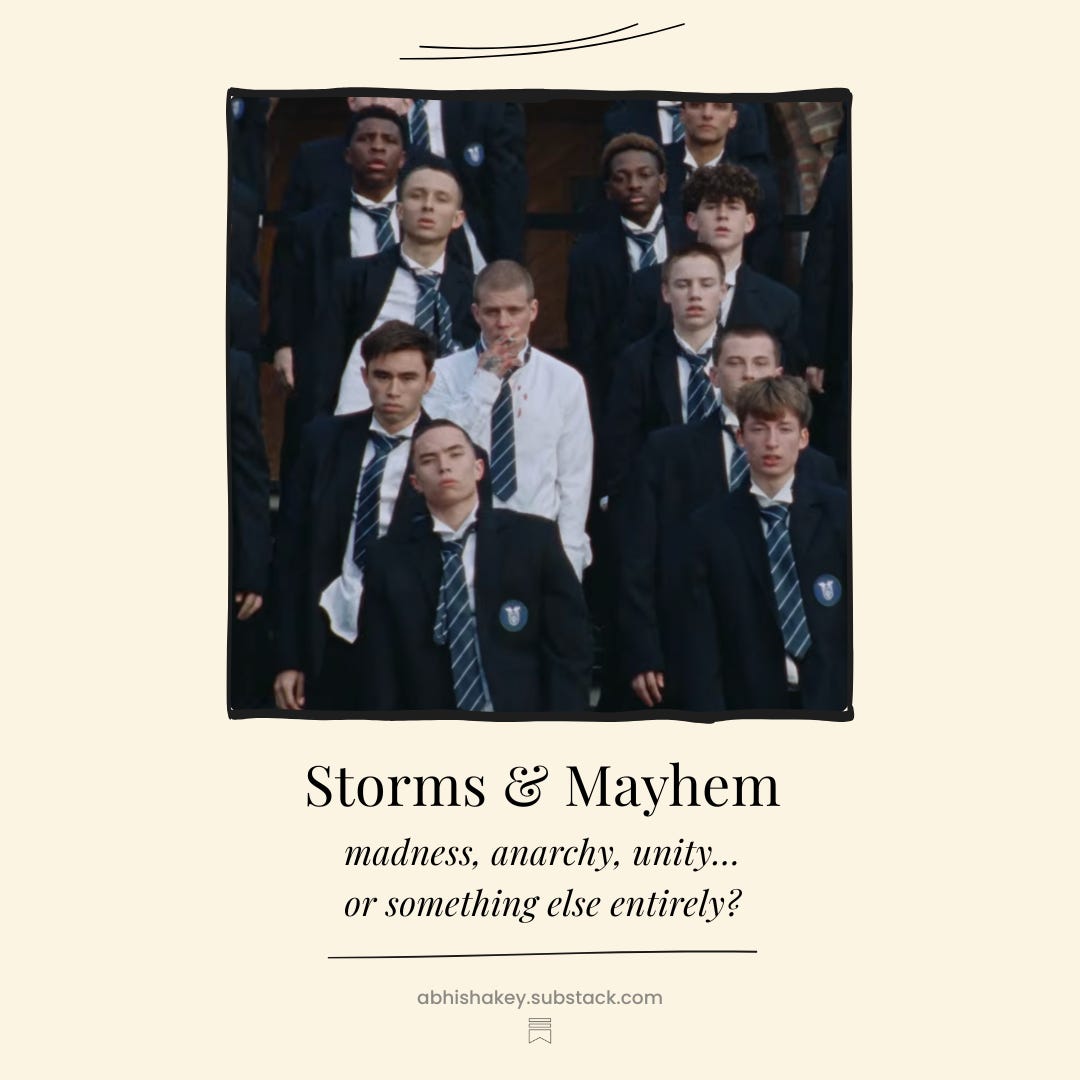
The last of my Curated/Cuts has to be the explosive new creation from Gener8ion & director Romain Garvas. It is an 8 minute short that serves as a music video for two tracks, and it did far more than make me think, ‘cool music’. You might have seen it appear in your feeds, but it likely was the second half, a brilliant one shot choreography. But I would recommend watching the whole thing, because the arc is so powerful.
Watch it, then read - I put down my thoughts on it as well as more about the people behind it in my substack coffee & conversations .
➕Quick Hits
Warner Music Group x Paramount Pictures announced a multi-year deal to “develop movies drawing on the lives and music of WMG‘s roster of artists and songwriters.”
Instagram is expanding its crackdown on unoriginal content and content aggregators, meaning accounts that regularly repost content they didn’t create. Good explanation here from Lindsey Gamble.
I wrote last week (again) about AI music models and the proliferation of gen AI music. Despite the so-called deals Suno and Udio had to make with music labels around copyright and licensing, the enthusiasm around building these is still high- 13 have been released in 2026! Jake Handy is handily tracking all the services here.
We are drawn to garbage, of course.
But we quickly get bored of it, slowly and then all at once.
_Ryan Broderick / Garbage Day