


In all the hand-wringing we seem to partake in, about what is real and not, what is lasting or fleeting, there is enough in our world that is warm, creative, earnest. I felt it this week in the first story about lovers of film and how their passion moves them. True expression can also be jarring, captivating, make us think about the permanent elephant in our room- AI.
AI can boost creativity, but I may not mean it in quite the way you might think. On the one hand, that proposition is propped up this week when I look at Netflix’s acquisition of Ben Affleck’s AI company. On the other, the thought is flipped on its head by the fan reaction to a masked rock duo from Canada.
Enter this week’s collision of creativity, brands and tech on The Colour Bar. There’s enough to enjoy, or contemplate, or both.
Cheers,
Shakey
The Last Picture Shop: An old-timer’s search for Tarantino
AI vs Microtonal: Music shows the way?
Brands at Play: Bad photos, please + Nike’s misstep
Affleck + AI + Netflix: What’s the deal?
▶️ Curated/Cut: Dinner date from hell
➕ · APAC joy for Netflix · Norwegian good · YT’s deepfake protection ·
☝🏽Busy? Lazy? Multitasky? Click play above and let me read this to you.

1. The Last Picture Shop
Now here’s something that will feel good.
This here idea, campaign, project- call it what you will- ‘The Last Picture Shop’ strings together the battling vestige of cinema, the charm of times almost gone by, with that quintessentially modern-day idea of crowdsourcing and social media buzz.
“If you have ever fallen in love with a film, a record shop, a bookshop, or a place that made you feel less alone, you already understand why this matters.”
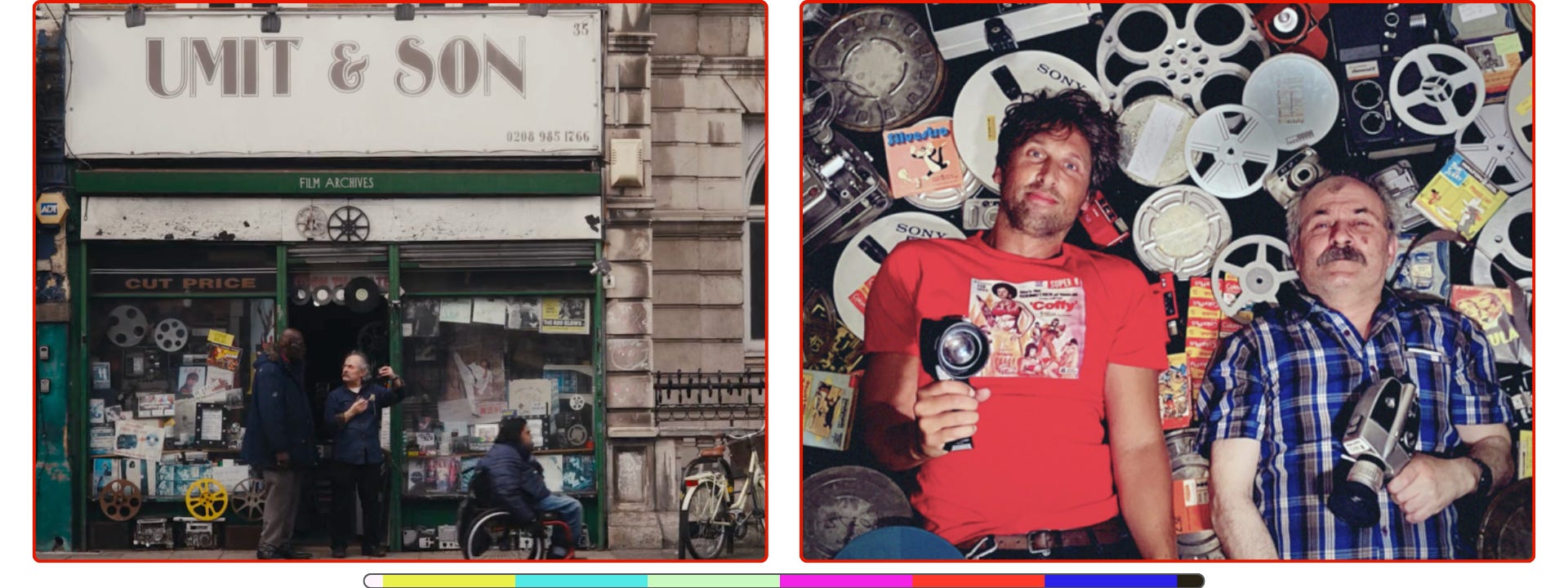
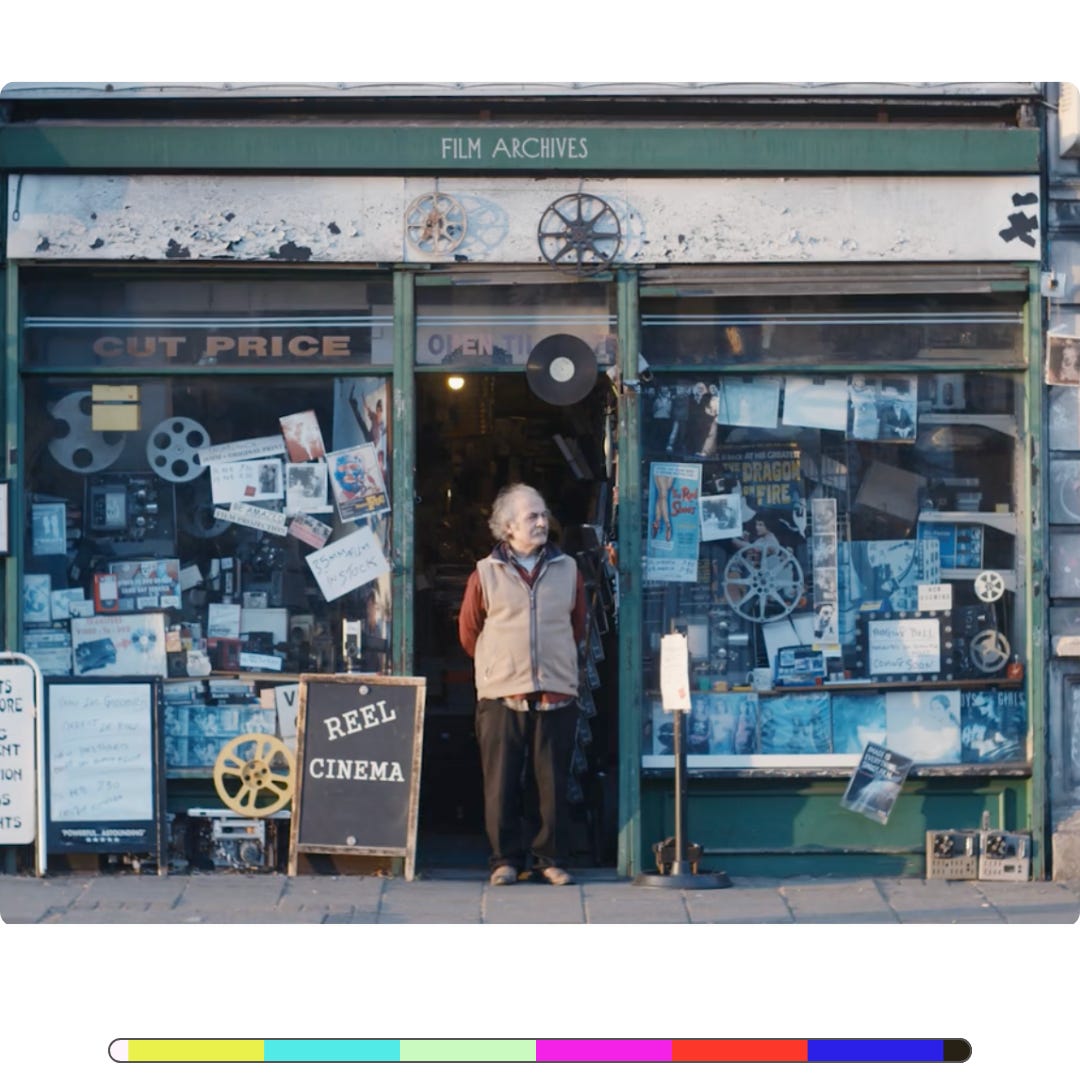
Umit & Son is a quaint shop in East London. ‘Film Archives’, it says under the main shop sign. 65 year old Umit Mesut has run it for over forty years. A projectionist and unabashed lover of celluloid, he and his beloved shop now face trying times.
Back in 2011, documentary maker Liam Saint Pierre made a film that introduced him to Umit. One filmmaker, one film preserver, film lovers both. They became friends, and set up a rare film club projecting old movies off 16mm. Years later, Umit & Son finds itself in darker times… and an idea is suddenly sparked.
‘Lets go to LA, and find the ‘high priest’ of celluloid- Quentin Tarantino, no less- and see what he thinks of saving this bastion of film. And oh, let’s make a film while we are at it.’
Ok, then!
Umit did leave London for the first time and hopped across to LA once. Since, The Last Picture Shop has blazed past its target amount on Kickstarter this year, and the team are back filming and editing. I don’t know if they met Tarantino, nor what is to happen to the shop.
Yet.
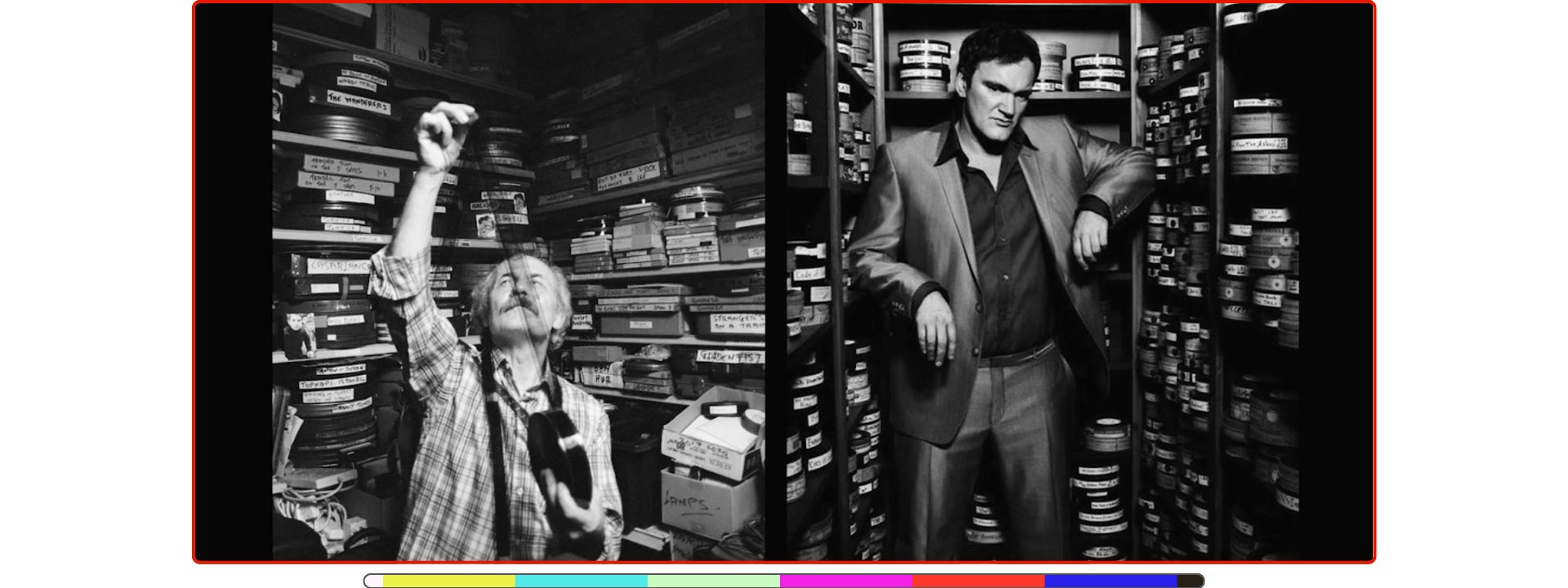
But I do know that this is the kind of coming together of creativity meets passion meets wild idea meets clever commerce that makes it all make sense.
· Liam Saint Pierre · Nan Davies @ One Wave ·
photos courtesy Last Picture Shop Kickstarters & IG

2. Microtonal vs AI
AI can boost creativity, but I don’t mean it in the way you might think.
We all talk about AI now- online, offline, professionally, personally, casually, contemplatively.
Last week I- very unexpectedly- bumped into a music recommendation on, of all places, Linkedin. And I guess I have AI to thank for it. More accurately, a less-than-enthusiastic gen AI lens.
You might well have seen Angine de Poitrine in your feeds. Or not?
This is a Canadian rock duo that’s been around for about two years, but exploded a little bit in the last few weeks courtesy of a live performance uploaded to YouTube.

With their costumes and masks, they look gimmicky, sure. But their sound is distinct. Bold. Odd. Compelling.
I did a piece on them a few days ago- watch and get a glimpse into what they’re like.
And while there are a few reasons why they’ve been embraced by so many, one of the filters they are being viewed through is… AI.
Not because they have used AI in their music. Because they have not.
And listeners (viewers) think their distinctive sound makes them a good symbol of the anti-AI , the real, the unique, the humanly expressed.
But the point I’m making here, is this.
We seem to be entering a time, a window for a different sort of real creative freedom right now.
For those who want scale and optimisation and volume, I am sure you are leaning right into the AI, or considering how you can. Those who want to stand out, ‘break the clutter ‘(ugh), shake up their audience? Maybe get the heck away from AI and be weird.
It has always been thus, you say? Yes, fair, that’s often been the mandate for creativity- to ‘stand out’. It has- but not by everyone- been seen primarily as a vehicle to become distinctive.
But as more and more people will be surrounded by a sameness, even if they don’t recognise it, this time we are in feels like a free pass to be weird with our expression…reckless, even.
And the pass comes with an expiry date, I think.
So go on, let’s find our inner weirdos.

3. Brands at play
· Crappy photos FTW! ·
Iceland Air is looking for a ‘really bad photographer’.
In this latest stunt, they want to prove to the world that “even the worst photographer can take great photos of Iceland.” Because hey, the country is just so damn photogenic.
Fair call, actually!
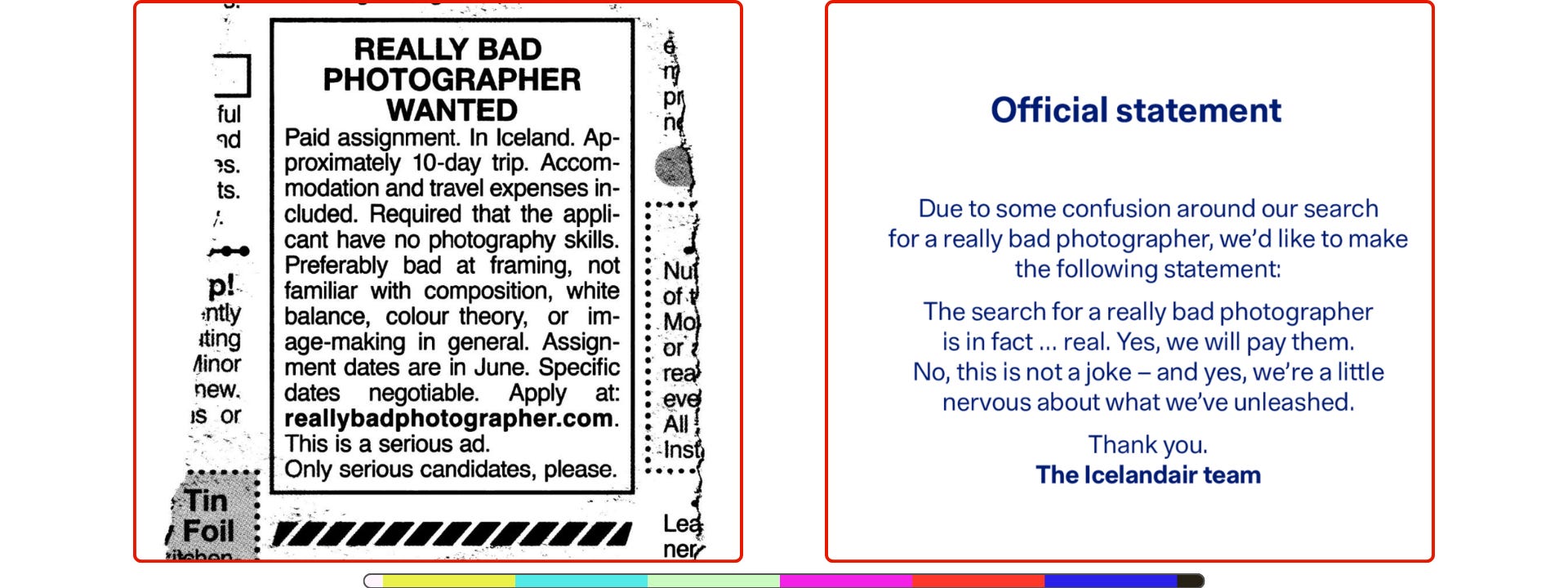
Requirements include “You’re frequently disappointed with your own photos”.
And then they had to go follow it up with another post just to clarify that it is all very real. A fully paid trip, $50k cash and a few hundred more crappy photos on your phone.
Sounds like a deal!
Well played, IcelandAir.
* Last year they played off the whole real/fake conversation with this spot, following a bloke who claims Iceland is AI-generated. Yes, the country itself.
· Nike’s misstep ·
At the Boston Marathon, Nike might have thought it was re-channeling its edgy attitude with a billboard that said, “Runners Welcome. Walkers Tolerated.”
While some thought it cool / amusing, most reactions weren’t great, including from runners who felt it was not in sync with the community’s ethos.
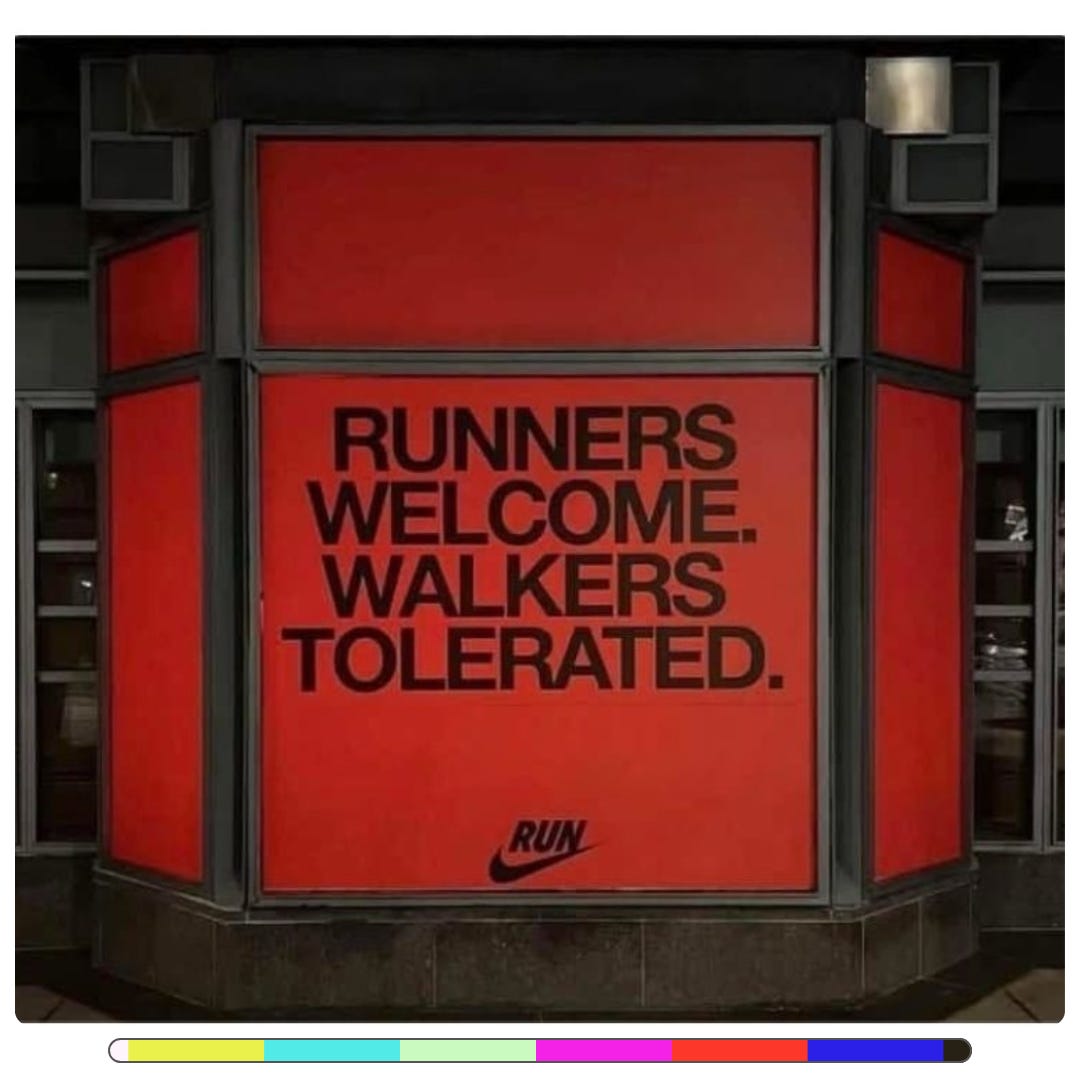
Nike pulled down the ad, and, erm apologised. “We want more people to feel welcome in running, no matter their pace, experience or the distance. One of them missed the mark.” Yeah, no that copy doesn’t exactly scream ‘welcoming no matter’.
Quite literally.
Some reactive advertising followed, too. I’m not a fan of the ad, sure, but this is also a reminder of how brands are not as in control of their own narrative as they used to be, and how quickly they can lose some of that control.
This came around the time of some similar ‘non-inclusive’ messaging in London. FWIW, the Boston board was replaced with one that said, “Movement is what matters.”

4. Ben Affleck, Netflix, AI
A brief stroll today around the Netflix acquisition of Ben Affleck’s AI company, ‘InterPositive’. Many were surprised when it was announced back in March, but then the dots connected well, explaining Affleck’s fairly clued-in takes on AI and movie making in recent times.
First off, be clear this is not another consumer-facing text-to-video play. It is an internal filmmaking toolset, not one intended to magically generate movies ‘from prompts’.
Netflix and Affleck both have leaned hard into the “creator-first” narrative; this is framed as a tool that supports filmmakers, not undermines them. The AI trains on a production’s own footage to help solve expensive, time-consuming post-production problems- think continuity fixes, relighting, reframing, wire removal, background cleanup and color matching. In theory, this means it is less about reimagining the creative process, or nudging out directors & actors, and more about removing friction from filmmaking.
Needless to say, there is both positive interest as well as scepticism. Because many or all of the tasks it will take on, are human tasks right now. The economic incentive for Netflix here clearly and unsurprisingly seems to be speed, scale, lower costs. And while some might wish such tools can enable new and independent creative voices, gotta point out that this one is very much locked within Netflix’s walls- not something openly available to the filmmaking community.
The patent was made available, and inevitably eyes were drawn to examples in the filing of projections which shaved double digit percentage points off costs in various departments using this tech in a sample production- from VFX to Art, set and background actors.
Adrian Lopez broke down the shaky ground for the VFX community, while Rest of World looks at the impact on the global workforce.
“If AI tools begin handling tasks like cleanup, relighting, or even base compositing, the biggest impact will be at that entry level,” DNEG’s Kazi told Rest of World. “Those early-stage opportunities are where artists traditionally learn by doing.”
Relatedly, I also learned that Netflix opened a new facility called Eyeline Studios in Hyderabad, India last month. It is designed for what Netflix calls “generative virtual effects.”
I am far more interested in these developments than the “look I can prompt Hollywood level stuff” that is flashed around our feeds.

5. Curated/Cut · Dinner Date ·
This is the kind of thing you may or may not give a moment or three to when it shows up in your feed. But today, you could give it a shot.
This is an example of what modern brand storytelling can be. I say ‘can be’ not ‘is’, because far too many brands are nowhere near this confidence, displayed here in ‘Dinner Date’ by apparel brand Mahila in the UK.
Yes, Mahila appears to be small brand, social-native, with a niche audience and shorn of some of the trappings ‘bigger’ brands have to deal with. Beyond that, honestly- this is not about some stunning craft or pathbreaking narrative. Even if the ‘genre’ or content or attitude (and man, there’s attitude!) may not be your cup of chai, I like how a pretty simple idea and execution is made memorable (great writing!), *and that the brand believes this will leave a mark on its audience.

➕Quick Hits
For Netflix, APAC is emerging as its fastest-growing market in Q1 2026. The region posted a 20% YoY rise in revenue.
Deepfake protection coming to Youtube. Their proprietary detection tool, “is now open to anyone at high risk of having their likeness abused: Actors, athletes, creators and musicians, whether they have a YouTube channel or not, can sign up to identify and request removal of deepfakes on its platform.”
Any public figure will need to opt-in for this. Here’s the full (disproportionately long?) THR piece.Norway is the latest country looking to pass a bill later this year on banning social media for U16s. One of many European policy conversations, after Australia led with a world-first ban in December ‘25.
