


Welcome back to another dispatch of The Colour Bar- thanks for having me in your inbox, or feed, or both. I promise- I’m not creepy.
Though Apple likes creepy when talking about its privacy, as you will see. But the rest of this week’s stories all see how AI/LLMs/genAI is colliding with sports, marketing, fonts(?) and for good measure, with truth itself!
Because this is where creativity, entertainment, media and tech collide, and you can get every missive here on Substack, or over on Linkedin, if that’s your jam.
Thanks,
Shakey
If Serif: On serifs & AI.
Giant Missteps: Oh Manchester, what have you done.
Curated/Cut: Apple comes for the Clingers.
Objectively Objecting: AI, our custodian of truth!
➕ · Scorsese’s AI · Murdoch’s Vox · Lacoste’s serif ·
☝🏽Busy? Lazy? Multitasky? Click play above and let me read this to you.

1. If Serif
I have always enjoyed playing with fonts. Maybe it goes back to my dabbles with calligraphy in younger days, occasional stabs at it in older days, even a type-design course once. I tsk tsk at default font choices, frown at careless multiple fonting in documents, and pause to look at fonts that I like or dislike… or, erm, make me pause.
A general, non-nuanced distinction between serifs and non-serifs goes along the lines of- Serifs stand for the formal, the more literary, even authoritative, they ‘have character’; sans serifs are modern, clean, better at communicating.
But maybe the distinction has been made most in the last two-three decades, going back even to the 90s. As screens took over our reading lives, serifs suffered. Originally this might have been driven by serif fonts’ lower clarity on monitors with lower pixel counts. As websites, then apps and social media became primary funnels, sans serif fonts became the accepted norm for digital, particularly UI/UX but liberally across logos, brand identities and advertising too. Wrapped in other themes like minimalist, bold type, flat design, the majority of digital design became dominated by sans serif fonts.
I have presented title design or brand identity proposals that spouted this very need to belong to a ‘modern, digital’ look and feel. (I mostly stand by those!). But at some point in the last six-eight years, I started to tire of sans serif being ‘a given’, a default. Serifs started populating our feeds more, sometimes driven by hipster/indie/small business vibes, at other times riding on the back of retro/nostalgic themes.
This is not an academic analysis, but paints a little trajectory I have noticed and my own personal likes. I write The Colour Bar largely in sans serif, but soon after launching it moved to serif font headers; I publish Coffee & Conversations largely in serif, probably falling on the literary/eclectic trope for those writings.
All this to say that I wholeheartedly see the influence, importance and irrationality around fonts. Now, with the ever-present spectre of generative AI and vibe coding, fonts are played with in a different way, allowing for AI models to draw on known clichés or perspectives, and use them in ways that can seem clever to some… or sneaky to others.
As Keya Vadgama said last year on her substack post which I enjoyed but lost to to the ether, “It’s not that difficult to discern why AI-native companies in particular are being drawn to serif fonts: AI is inherently cold and without opinion. Serifs add visual interest and warmth. It signals “we’re AI! but real humans use (and made) our product! we swear!”
Then Wired’s gone and done a piece called ‘AI Has Come for Serif Fonts’, in which they say, “AI companies are using serifs to project humanity. Critics are calling it ‘tasteslop’.” There is an interesting case John Semley makes for this, citing a general trend for AI startups to minimise their tech-overlord connotations and bolster their human, friendly, assistant vibes.
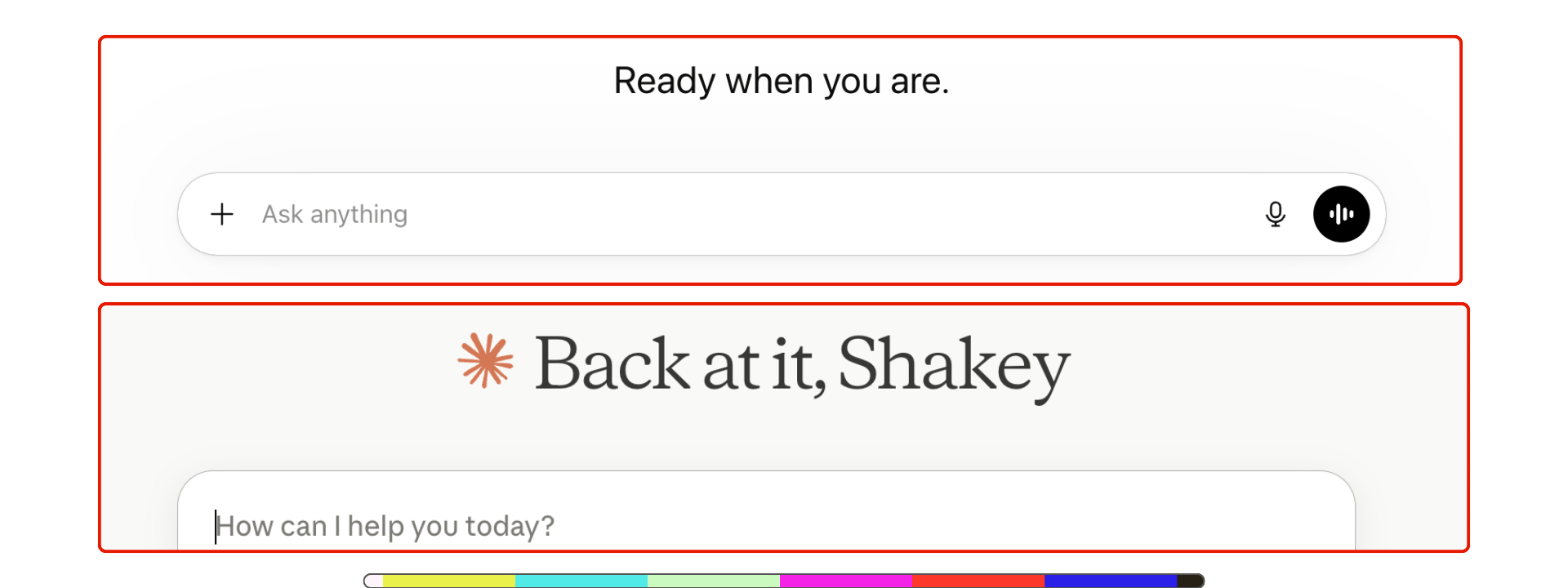
Most apparently, you might think of Claude (serifs) vs ChatGPT (sans serif). Do you find one more personable, trustworthy than the other? Or are you firmly in the “fonts don’t matter” camp?

2. Giant Missteps
Teams in the Hundred, England’s franchise cricket jamboree, are releasing their new kits. The team from Manchester has new ownership, and is now the Manchester Super Giants. Their kit drop came in a video spot with the lofty message of uniting Manchester, bringing together the blue and red divide.
Say what you may about the message, or indeed the kit itself. LIke it or hate it. But most of the reaction I have seen is about something else.
The fact that the spot is, so obviously AI generated…. wait for it… slop.
It is an easy target for those who have more fundamental issues with visuals created by generative AI. But even if you’re happy to put aside such macro issues- the ethics, the impact etc etc; looking at it merely as another spot from an exciting sports team in a thrilling tournament… it is bafflingly poor. In fact, most gen AI evangelists should especially rail on this spot, because this is exactly the kind of apathetic creative output that confirms the effect so many of us fear - gen AI is democratising mediocrity, not creativity.
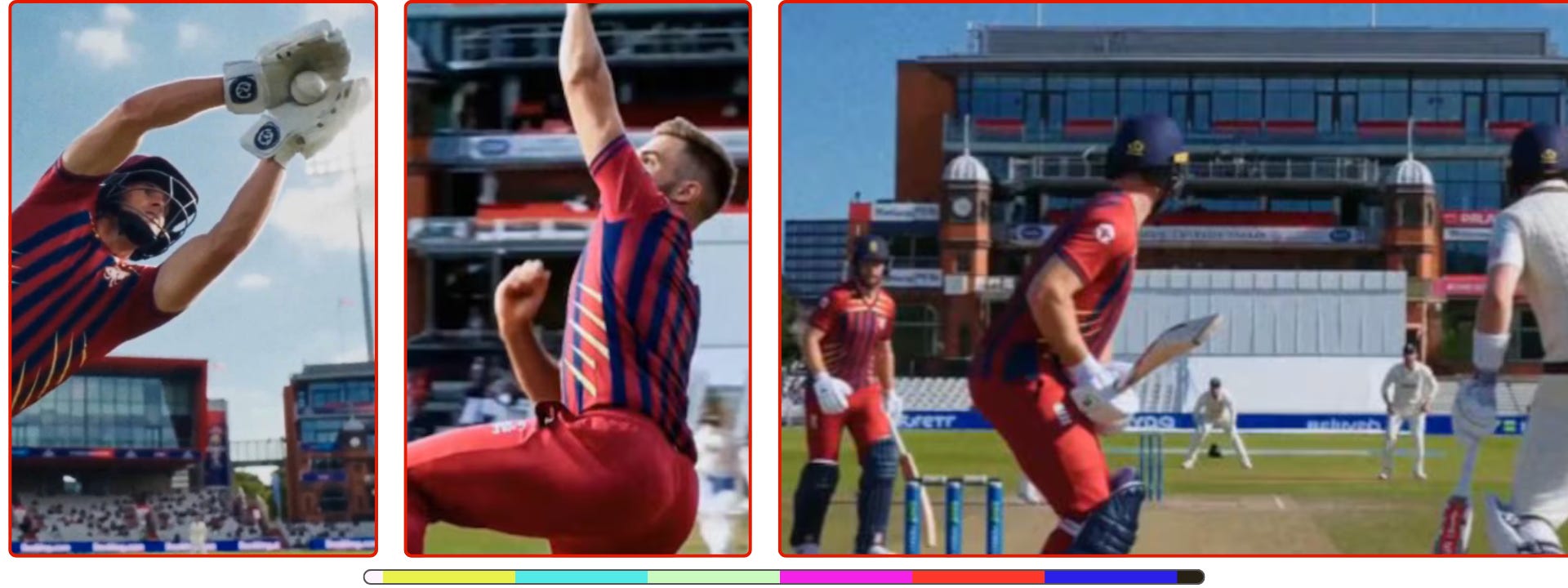
The list of missteps here is a long one, and right now I won’t look past floodlights in day time, opponents in whites, a bowler bowling without a ball, batting gloves for a wicketkeeper and just the kind of stilted, chopped up flow we have grown accustomed to seeing in such videos.
It boggles the mind how multiple people involved in something like this all felt it was good to go. Unfortunately, it reeks of the blind belief in the efficiency and benefits of AI that pervades all walks of work in 2026. Do it because it’s quick. Do it because it’s ok. Do it because it’s cheap. Do it because everyone else is, and gosh, we’re all so smart for using it.
So yeah, I may not have set out to skewer this spot, much as it deserves to be; it is the growing ecosystem it represents that leaves me shaking my head every week.

3. Curated/Cuts- Clingers
Apple is back with another privacy campaign, with its reliable route of personifying data tracking. Striking visual device- silver-suited people atop shoulders-tick ‘; suitably helpless internet users, tick; cool apple user making them all go ‘poof’, tick.
It might seem ‘a bit on the nose’ to some, but it’s pretty consistent with how they have tried to position Safari and their privacy chops. Not so long ago, Flock brought us creepy camera-birds, and a few years ago the Trackers were literally people following. Admittedly, the vocalised “Chrome!” reference is a bit jarring.
It’s being called sinister, creepy, funny, massy and un-subtle.
Please, choose your judgement.
Credits: TBWA\Media Arts Lab · SMUGGLER · Director Ivan Zachairas · House of Parliament · TRAFIK · WORK USA ·

4. Objectively Objecting
You can have the truth, please pay here.
Facts and truth seem to be at a premium in our information age. Reams are written about the incongruence of a time when so much is at our fingertips and so little is reliable. The trust deficit with traditional media; the battling embrace/ backlash around AI; the instinctive, sometimes disproportionate faith in individuals; the accompanying disappointment with institutions.
Questions abound around truth and how to ensure it is not obfuscated.
At such a time, please meet an AI-powered platform that claims to usher in accountability. How? By being a pay to play platform where journalism can be challenged- in theory by anyone- its credentials investigated and adjudicated by a jury of LLMs. Yes, that’s right- a panel of your friendly neighbourhood chatbots will find a report and its writer ‘innocent’ or ‘guilty’ of peddling untruths.
Hear it from them:
If I had no context, I would have thought this satire. A spoof piece from SNL, or a Youtube skit- the cheesy VO, the hyped up script, the (un?)shockingly poor visuals that serve as a launch video for a new product. But in fact, all those tell a story of their own.
“it’s the same as [X’s] Community Notes. The wisdom of the crowd plus the power of technology to create new methods of truth-telling.” _Aron D’Souza, founder.
There are many concerns around this- another tool for the privileged to protect their reputations, will paint all anonymous sources as unreliable, its dangers for whistleblowers, the irony of error-prone LLMs judging facts. Peter Thiel’s involvement has only fuelled these. The founder, Aron D’Souza, is known amongst many things as a key figure in bringing down celebrity news site The Gawker, and founder of the Enhanced Games (quite simply, Olympics + drugs).
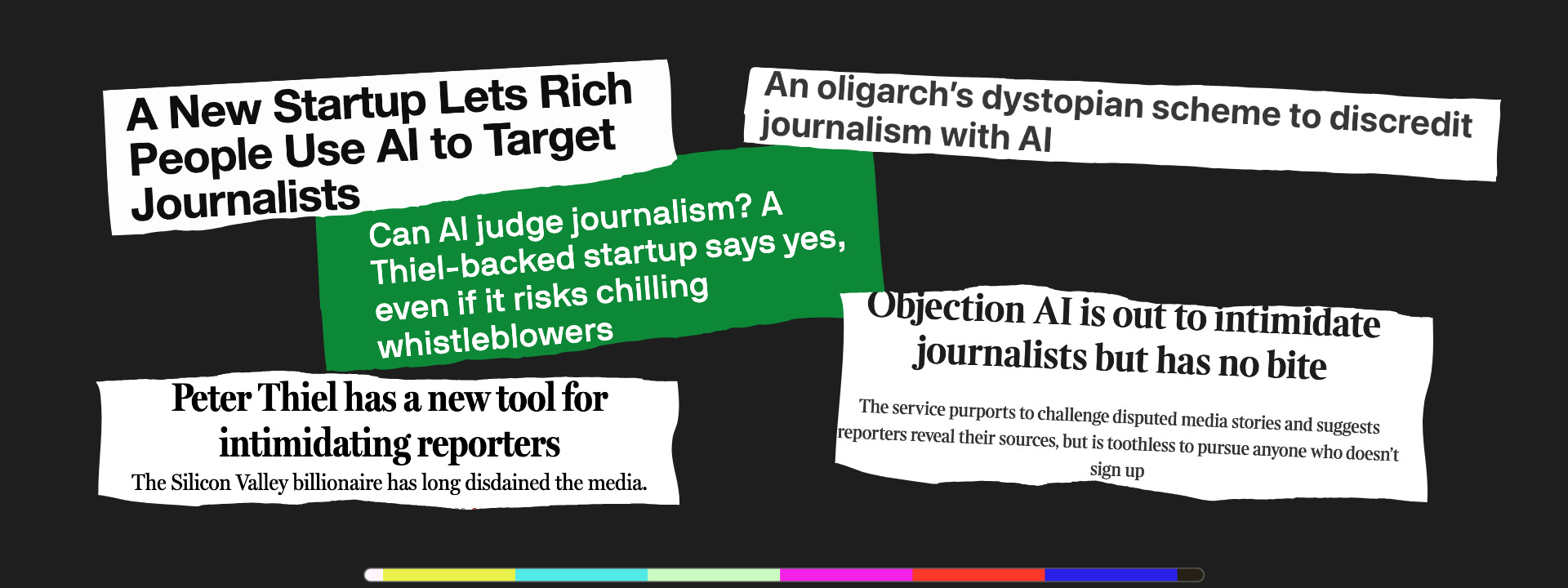
Rebecca Bellan at Techcrunch says, “his solution presents a lose-lose for journalists: either divulge sensitive source information to Objection’s “cryptographic hash” that determines “if it’s high quality reporting,” or face demerits for protecting sources who share important information at great personal risk.” She also quotes defamation lawyer Chris Mattei much less polite take- “seems like a high-tech protection racket for the rich and powerful.” ^
John Mac Ghlionn writes that “Objection poses as a truth-seeker. But at bottom, it is a reputation protector for wealthy companies and individuals — a weapon to add to their arsenal of defamation attorneys, communications firms, and friendly political contacts.” ^
But. Objection is pausing. If you head over to their website, you see this incredibly clear and reassuring message.
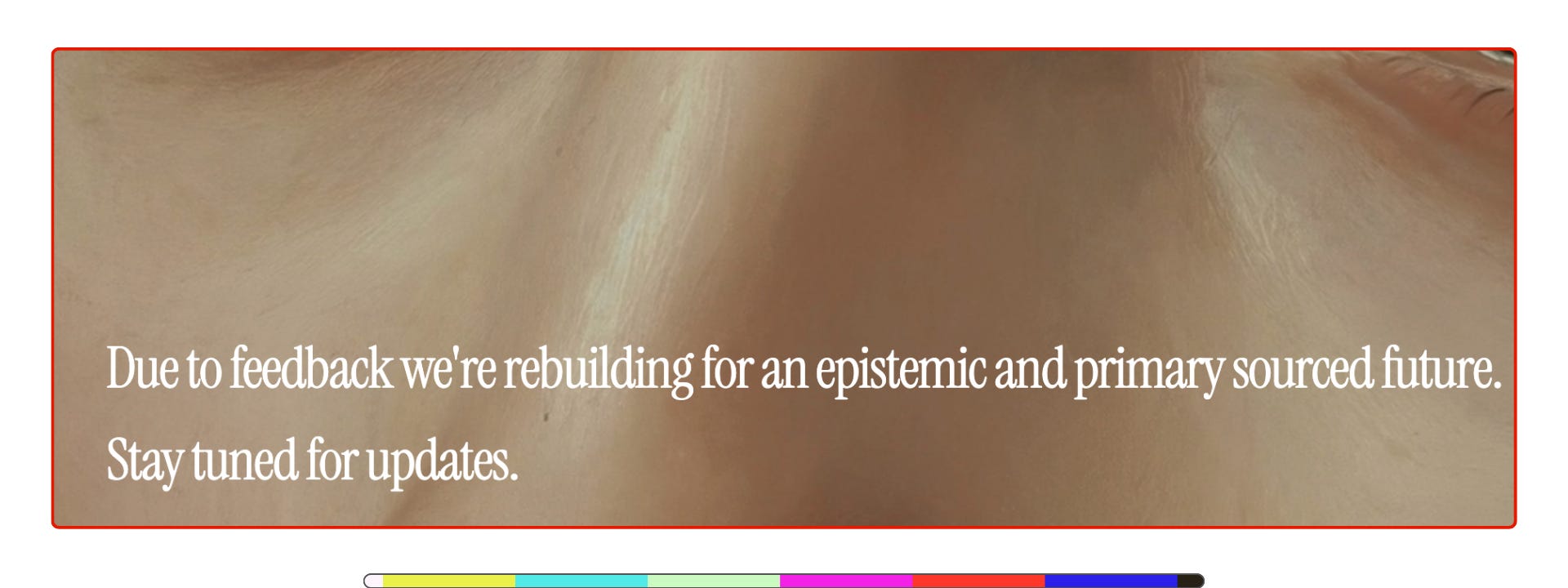
That’s pretty clear, right? But I thought I’d ask for it to be decoded by some of their friends.
ChatGPT had a lot to say, including, “Reading between the lines- the wording is quite unusual and somewhat intellectualized…. It’s essentially a shutdown/reboot notice dressed in the language of information science and AI culture.”
While Claude felt, “The notable thing is that it’s the sole message- no logo, no product description, no timeline. That’s either confident minimalism, or they’re in early enough trouble that they don’t have much else to say yet.”
Harriet Williamson says the platform has told Novara Media that “it’s being rebuilt and relaunched with “significant retooling” after customer feedback” ; she also has a good video story, including the wider context for journalism.
➕Quick Hits
A survey carried out by Lacoste in 2023 revealed that while the majority of respondents instantly recognised the brand, many were unaware that the brand is French. Cue the return of the Serif!
Martin Scorsese has become an advisor on an AI software for pre-vis & storyboarding. Some say this means “Martin Scorsese is betting on AI”, while others are a bit surprised/disappointed that the generally traditionalist legend has crossed over.
James Murdoch has bought New York Magazine and maybe more crucially the Vox Media Network, i.e. podcasts.
Tech doesn’t have an image problem.
It doesn’t have a message problem.
It has an intention problem.
_Brian Philips, in The Ringer